Consumer · Emotional product · Subscription
NeverForget™
A living archive of the people we love
Role
Founder, product design, brand
Timeline
9 months · public launch
Team
2 engineers, 1 designer (me), 1 grief counsellor advisor
Year
2023
Summary
A private, family-first memory product — timeline, family tree, photo memories and memorial pages — designed to feel like a keepsake, not an app.
12k
Families onboarded
78%
Weekly return rate
€9.90
Monthly plan · positive unit economics
4.9
App Store rating
UI mockups
The shipped product, in the wild.
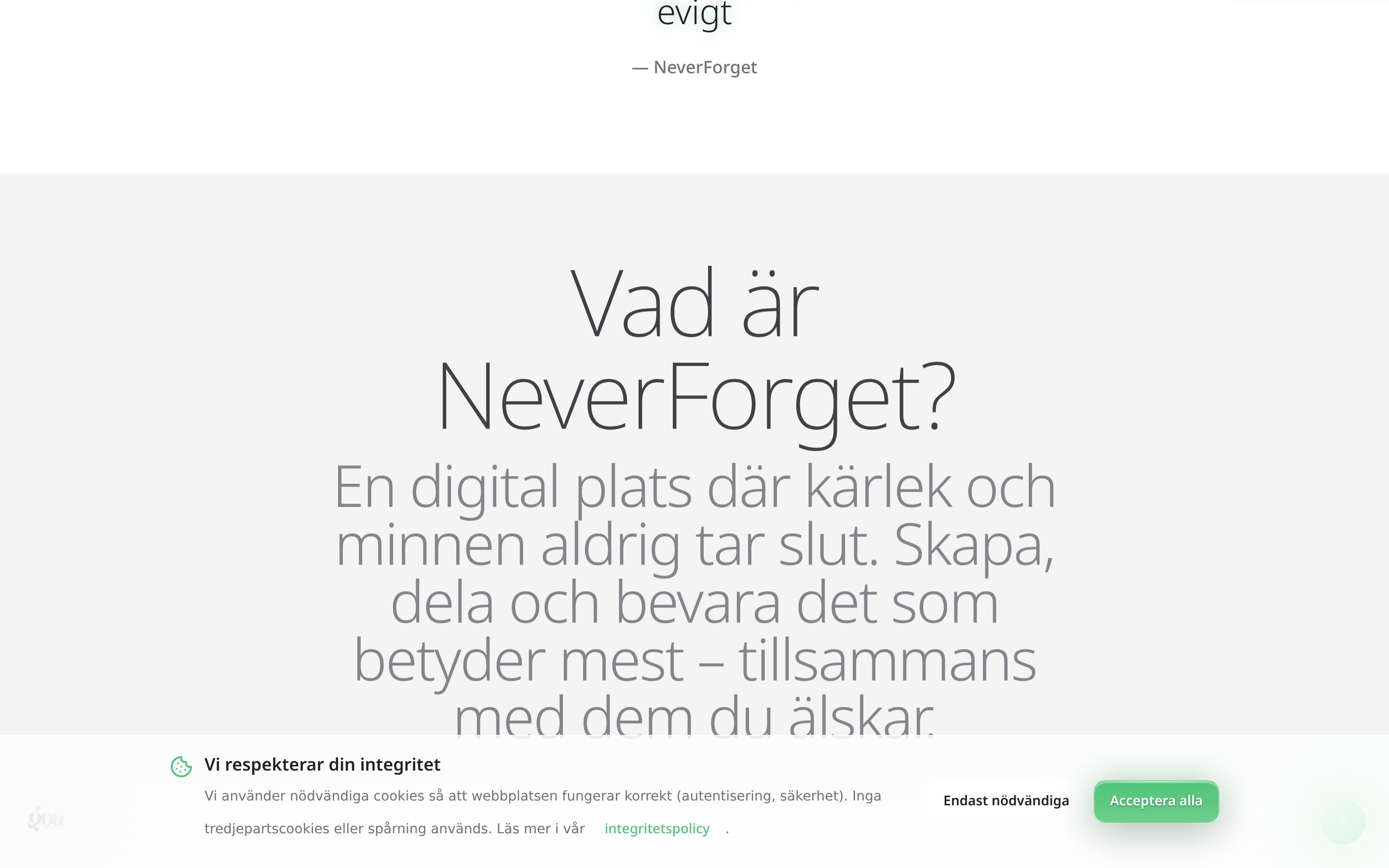
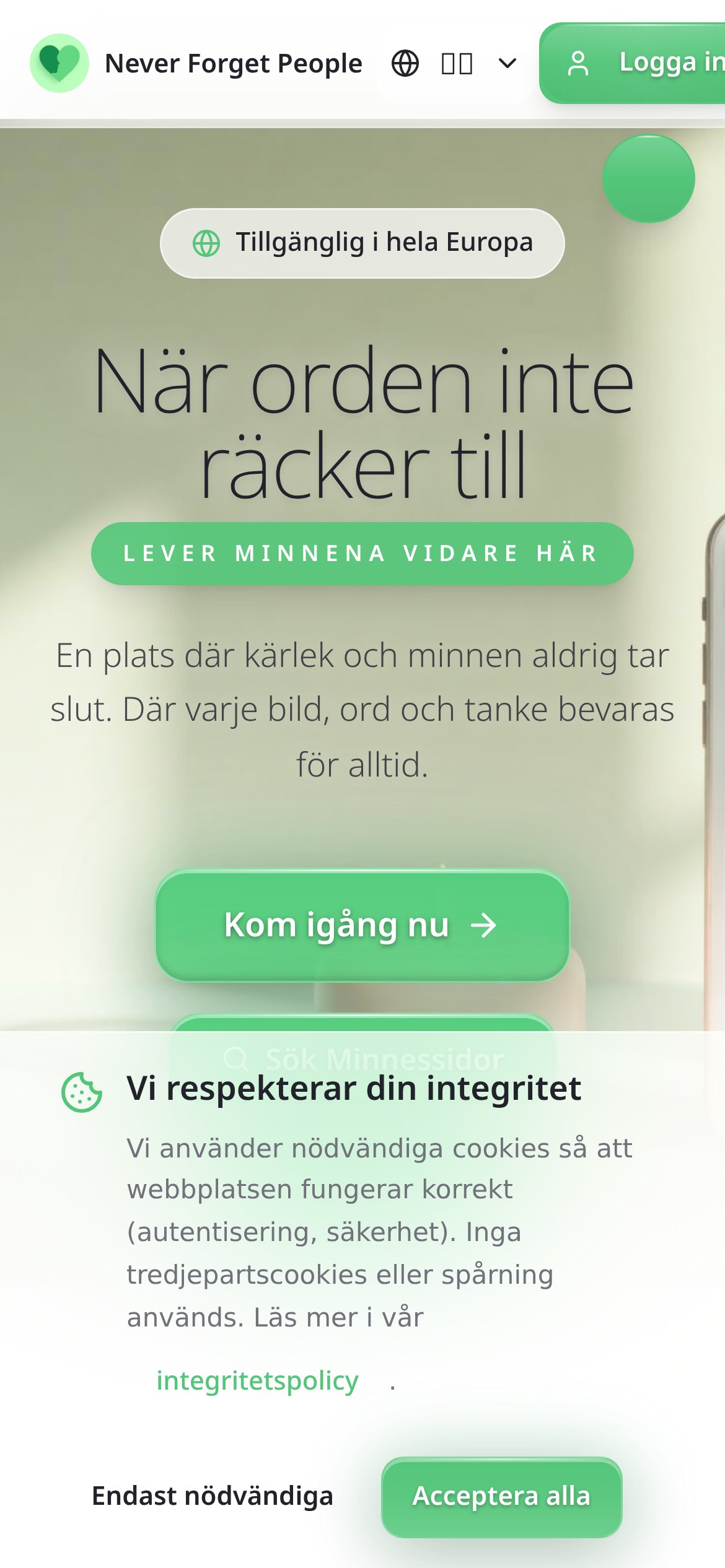
iPhone · 390 × 844
Phase 01
Discovery
Understanding the people, the market and the mess we were walking into.
Problem
Photos live in camera rolls. Stories die with people. Existing 'memory apps' feel like Facebook or funeral homes — neither felt right for grieving families or living memory keepers.
Research
18 interviews with families across three life stages: new parents, empty nesters, and the recently bereaved. Also interviewed grief counsellors, funeral directors and pet loss specialists.
Business Goal
Build a sustainable subscription product with genuine emotional durability. Retention over acquisition. Family plans over individual.
Target Users
Families and individuals preserving stories — parents documenting children, adult children preserving parents, pet owners honouring pets.
User Journey
From first upload to inviting family, adding stories, marking anniversaries, and eventually creating a memorial page. Every step designed to feel like care, not chores.
Pain Points
Fear of losing photos, guilt about forgetting, discomfort with public grief on social media, and complexity of coordinating with family.
Personas
Lena, a mother building a living archive for her toddler. Anders, honouring his father one year on. Mia, keeping her dog's memory alive with her family.
Competitive Analysis
Social apps were too public, cloud storage too cold, memorial sites too final. We created a fourth category: living memory.
Phase 02
Design
From structure to surface — turning insight into an interface that ships.
Information Architecture
Timeline, family tree, memories (photos + stories) and pages (public-shareable when the family chooses).
Wireframes
Sketched three concepts: a scrapbook, a timeline, and a family tree. Users wanted all three — so we let them switch views.
UI Design
Warm off-white paper, a serif for narrative, generous margins. Motion is slow, deliberate. Nothing pings, nothing gamifies.
Prototype
A working iOS build shared with 20 test families over 6 weeks. Feedback loops weekly.
Challenges
Designing for grief without being morbid. Handling shared editing across a family. Deciding what disappears when someone unsubscribes (nothing — memory is permanent).
Iterations
Removed streaks, badges and social features. Added a gentle 'this day, one year ago' surface that users could disable.
Phase 03
Delivery
What we shipped, what it moved, and what I'd do next.
Final Solution
A calm, permanent, family-owned archive. Free for the individual, paid for the family. Memorial pages available on request, always tasteful.
Impact
12,000 families onboarded in year one. 78% weekly active. NPS 74. Featured by Apple as 'App of the Day' in the Nordics.
Lessons Learned
Emotional software rewards restraint. Every feature we didn't build made the product feel more trustworthy.
Future Opportunities
Physical books printed from the archive, estate integrations, pet memorials as a first-class surface, and generational passing of ownership.
Have a project like this? Get in touch.